
Dental implants are one of the most reliable and long-lasting solutions for replacing missing teeth. Most patients often ask, “How long does a dental implant procedure take?” Understanding the timeline can help you plan your treatment, set proper expectations, and ensure a smooth recovery. The duration of the treatment depends on several factors, including the condition of your jawbone, the number of implants, the need for bone grafting, and whether you are undergoing single-tooth restoration or full-mouth rehabilitation. Factors such as your age, overall oral health, and lifestyle habits can impact healing and the long-term success of the implant, making a personalized treatment plan crucial.
Overview | Steps and Timeline | Factors | Faster Recovery Tips | Complications | Conclusion
Dental Implant Procedure Overview
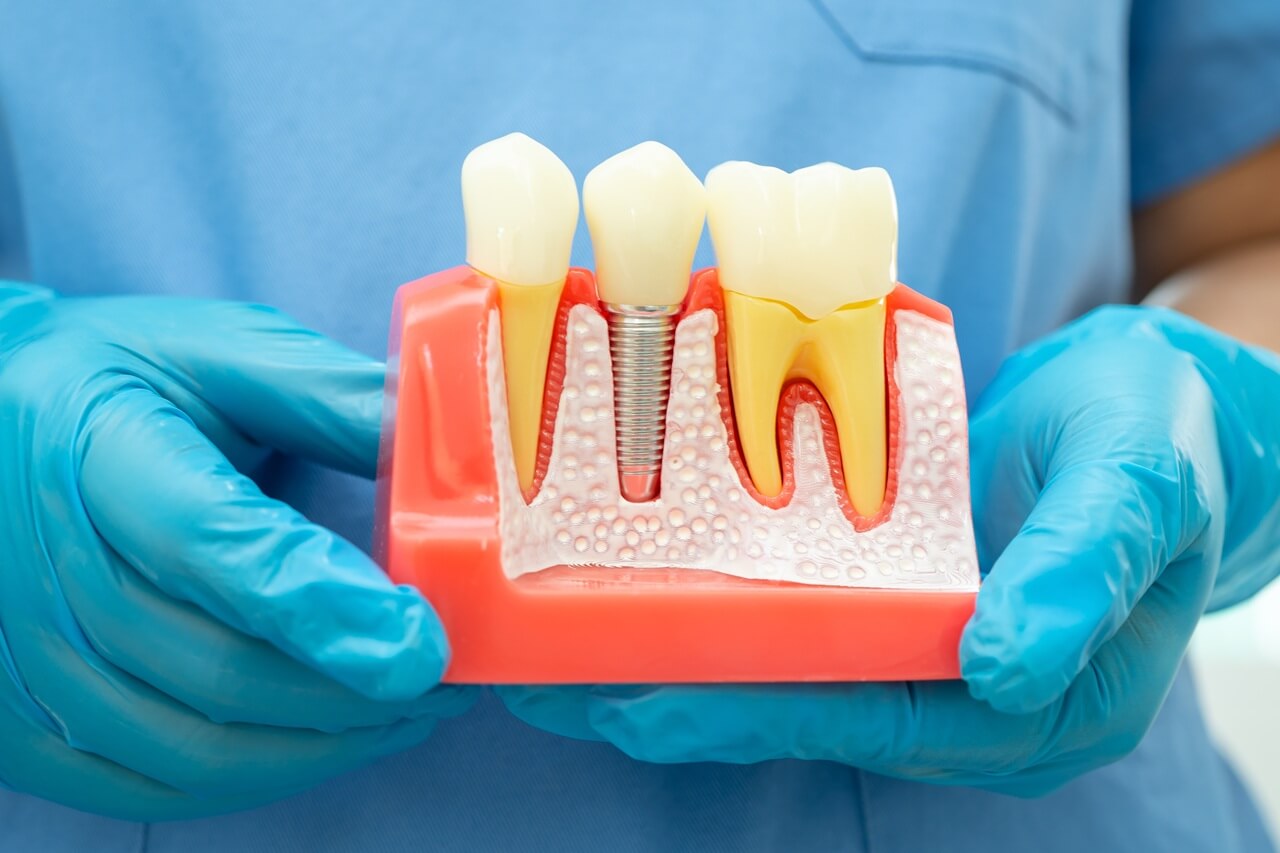
A dental implant can be placed immediately after tooth extraction if the tooth has a poor prognosis. This is known as immediate implant placement. In other cases, when the tooth has already been removed and there is an edentulous area, the implant placement may be delayed until the area has healed. Once the implant is placed, the bone grows around it through a process called osseointegration. This allows the implant to fuse securely with the jawbone, providing a stable and strong foundation for the artificial tooth. The healing period usually takes between 3 to 6 months, depending on factors such as jaw location, bone density, and overall health. After successful integration, the final crown is attached to the implant. The crown may be either screwed or cemented, resulting in a natural-looking and fully functional tooth.
Step-by-Step Timeline of the Dental Implant Placement Procedure
The total duration of dental implant placement procedure varies anywhere between 3 to 12 months, depending on the complexity of the case. For single or a few implants, the process may be on the shorter side, while full-mouth rehabilitations, such as All-on-4 or All-on-6 implant-supported dentures, can take longer. Here’s a breakdown of each stage:
1. Initial Consultation and Assessment (1 Day)
The initial step is a thorough consultation. Your dentist evaluates oral health and jawbone condition using CBCT scans to check bone density, quality, and volume. A detailed treatment plan is created, outlining the number of implants, timeline, potential bone grafting, and costs. This step ensures the procedure is safe, predictable, and tailored to your needs. At The clinic SKIN111, we specialize in same-day implants and offer complimentary consultations with a free CBCT scan, performed by our highly experienced dentists with over 40 years of combined expertise
2. Dental Implant Surgery or Placement (1 Day, 1–2 Hours per Implant)
Implant placement typically takes 1–2 hours per implant, depending on whether it is immediate or delayed, and if bone grafting is required. Guided surgery can make the procedure faster and more precise. During this stage, a titanium post is inserted into the jawbone to act as the root of the new tooth.
3. Healing and Osseointegration (3–6 Months)
Osseointegration is the natural process where the implant bonds with the jawbone, forming a secure foundation for the final restoration. In the upper jaw (maxilla), this process usually takes 4–6 months, while in the lower jaw (mandible), it typically completes in 3–4 months. Maintaining good oral hygiene and following post-operative instructions are essential during this period.
4. Abutment Placement (1 – 2 Weeks Healing)
The abutment is a small connector that is screwed to the implant to shape the gums and assist in developing a natural emergence profile. The gums normally heal within 1–2 weeks, preparing the site for the final crown. Proper hygiene and care are essential to prevent infection and ensure a successful restoration.
5. Final Crown Placement (1-2 Weeks)
Once the gums have healed, impressions are taken for the final ceramic crown, either via a physical mold or digital 3D scan. The crown is then fabricated in the dental lab to match your natural teeth in color, size and shape. After fabrication, it is either screwed or cemented onto the implant, completing the restoration and giving a fully functional, natural-looking smile.
Factors That Can Affect the Timeline
Several factors can extend the timeline:
- Poor bone quality or density
- Requirement for sinus lift treatments or bone grafting
- Severe infections or periodontal disease
- Systemic health issues like immunocompromised conditions or diabetes
- Complex full-mouth rehabilitations
In such cases, the total time for the final restoration may extend to 9–12 months.
Tips for Faster Healing After Dental Implant Placement
To ensure a smooth recovery:
- Maintain excellent oral hygiene by brushing and rinsing as instructed
- Avoid smoking and alcohol for faster healing
- Stay hydrated and rest during the first few days
- Follow your dentist’s instructions for managing pain and swelling
- Eat a nutritious diet to support bone and tissue regeneration
Proper care helps reduce complications and promotes a faster, more comfortable recovery.
Conclusion
From implant placement to final crown, most single-tooth cases typically take 3–6 months. For more complex cases, including multiple implants or full-mouth rehabilitation, the timeline may be longer. Understanding how long is a dental implant procedure and following proper post-operative care helps patients achieve predictable, long-lasting results. By adhering to your dentist’s instructions throughout the dental implant placement procedure, you can enjoy a natural tooth-like feel, improved chewing function, enhanced appearance, and boosted confidence for years to come. At The clinic SKIN111, we offer free consultations with our highly experienced implantologists to create a personalized treatment plan tailored to your needs.